

Buying a Long Island Home With a Finished Basement: What to Check Beyond the Square Footage
Buying a Long Island Home With a Finished Basement: What to Check Beyond the Square Footage
You're touring a home on Long Island, and everything looks promising. Then you head downstairs.
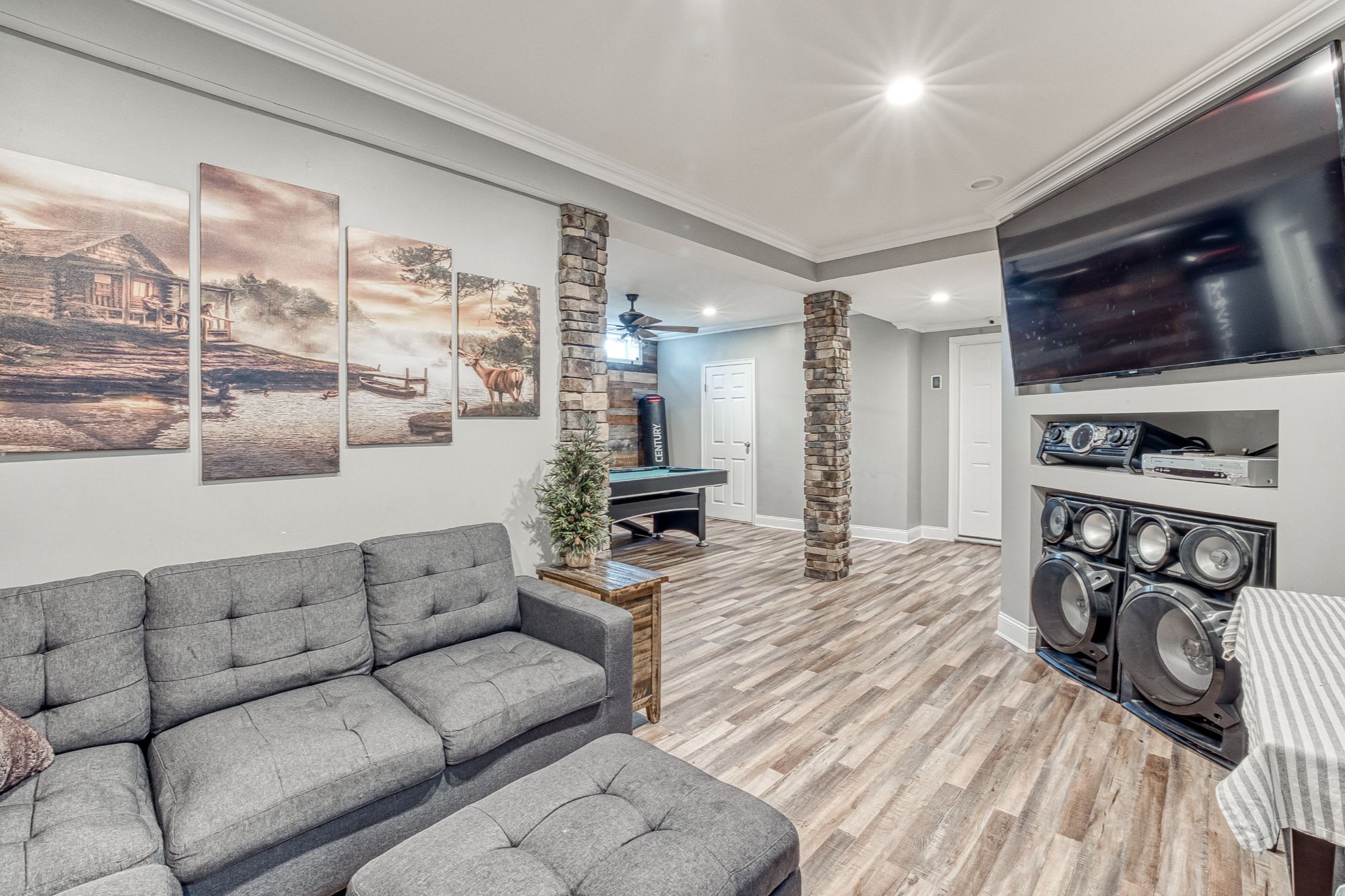
There's a beautifully finished basement with recessed lighting, comfortable seating, perhaps a full bathroom, and enough room for a home theater or exercise area. Suddenly, the house feels considerably larger than you expected.
It's easy to see the appeal. A finished basement can add valuable functionality to a property, especially when you're trying to make the most of your purchase.
But before you start planning how to furnish that space, there's an important question: What exactly are you buying?
On Long Island, the difference between a beautifully finished basement and a legally approved living area can have implications for financing, insurance, resale, and how you use the property.
Let's look at what buyers should investigate before making an offer on a home with finished lower-level space.
A Finished Basement Isn't Necessarily Additional Legal Living Space
One of the most common misconceptions I encounter is the assumption that a finished basement automatically counts as additional legal living space.
Imagine a Ranch with three bedrooms, one bathroom, and a fully finished basement containing a recreation room and another bathroom. From a practical standpoint, that basement may make the home significantly more useful.
But that doesn't necessarily mean the property can be represented as having an additional legal bedroom or that the basement square footage qualifies as above-grade living area.
Those are separate questions involving municipal approvals, applicable building and safety requirements, and appraisal standards.
A basement can be finished, comfortable, and useful without being approved for every purpose a buyer might envision.
That's why I encourage buyers to evaluate the space in two ways: how it functions physically and what uses are legally permitted.
Important distinction: Finished does not automatically mean permitted, and permitted does not automatically mean approved for sleeping, rental occupancy, or use as a separate apartment.
Check the Permits Before You Fall in Love With the Space
Throughout Suffolk and Nassau Counties, building permits and certificates of occupancy or compliance play an important role in documenting improvements to residential properties.
However, requirements vary by municipality and by the type and timing of the work.
For example, the Town of Babylon may have different procedures or records from the Town of Islip, Huntington, Smithtown, or Brookhaven. Incorporated villages can have their own building departments and requirements.
Before purchasing a home with a finished basement, ask what work was performed, whether permits were required, and what municipal records document the improvements.
A seller may have purchased the property with the basement already finished and have limited information about the original renovation. That doesn't automatically establish a violation, but it does mean further investigation may be appropriate.
Pay particular attention to bathrooms, kitchens, plumbing changes, electrical improvements, structural alterations, and any rooms being represented as bedrooms.
If the finished space is an important part of your purchase decision, have your attorney and appropriate building professionals help verify its status before you're contractually committed.
Can You Use a Basement Room as a Bedroom?
This question deserves special attention because the answer involves more than whether a bed fits comfortably in the room.
A finished basement may contain a room with flooring, drywall, a closet, and attractive lighting. It may even be furnished as a bedroom when you tour the property.
But appearance alone doesn't establish that the room meets the requirements for lawful sleeping use.
Depending on the applicable code and circumstances, issues such as emergency escape and rescue openings, ceiling height, ventilation, smoke and carbon monoxide protection, and municipal approvals may be relevant.
An ordinary basement window doesn't necessarily meet emergency escape requirements, and adding a larger window doesn't automatically resolve every legal-use issue.
If you're relying on a basement room as a bedroom, verify its approved use with the appropriate municipal department and qualified professionals.
It's better to understand those limitations before purchasing than to discover afterward that a room cannot legally be used as you intended.
Look Past the New Flooring: Moisture Is a Major Consideration
A newly finished basement can look fantastic during a showing. Fresh flooring, painted walls, and updated lighting create a strong first impression.
But the finishes don't tell you everything about what's happening behind the walls or beneath the flooring.
Basements are particularly vulnerable to moisture because they are partly or entirely below the surrounding ground. Water can enter through foundation cracks, poorly managed drainage, plumbing failures, or other conditions.
During a showing, pay attention to musty odors, staining, peeling finishes, warped flooring, visible mold-like growth, or signs that materials have been repeatedly repaired.
Look outside as well. Do downspouts direct water away from the foundation? Does the yard slope toward the house? Are there low areas where rainwater collects?
A professional home inspection can help identify visible concerns, although concealed conditions may require additional investigation by qualified specialists.
And if the seller discloses previous water intrusion, ask what caused it, how it was addressed, and whether supporting documentation is available.
The goal isn't to avoid every property that has experienced a water issue. It's to understand the problem, the repair, and the possibility of recurrence.
Does the Basement Have Proper Heating, Cooling, and Ventilation?
Comfort is another detail that's easy to overlook during a short showing.
A basement may feel pleasantly cool during the summer, but what happens in January? Is there an appropriate heating system? Does the space become damp or humid during warmer months?
Ask how the basement is heated and cooled, whether the equipment was installed properly, and whether the ventilation is suitable for the intended use.
Portable heaters or improvised equipment should not be assumed to provide a safe or code-compliant solution.
Also consider the location of mechanical systems. Boilers, furnaces, water heaters, electrical panels, and plumbing equipment may occupy part of the basement and require appropriate clearances and service access.
A finished basement should not make essential equipment difficult or unsafe to maintain.
Understand What the Square Footage Really Represents
Suppose you're comparing two homes advertised at approximately the same price.
One has 1,600 square feet of above-grade living area and an unfinished basement. The other has 1,600 square feet above grade plus a beautifully finished basement.
The second home may offer greater practical utility. But the finished basement shouldn't automatically be added to the above-grade square footage when comparing the properties.
Appraisal standards commonly distinguish above-grade living area from below-grade finished space. For certain mortgage appraisal reporting requirements, a level may be classified as below grade even if only part of it is below the surrounding ground.
Finished basement areas can still contribute value. However, the amount of that contribution depends on comparable sales, quality, condition, market demand, and applicable appraisal methods.
This matters because buyers sometimes calculate a home's price per square foot using an advertised total that includes basement space without recognizing the distinction.
Before making that comparison, ask how the square footage was measured and whether the reported figure includes below-grade areas.
What If the Basement Has a Kitchen or Separate Entrance?
Some Long Island homes have finished basements with bathrooms, cooking facilities, and separate exterior entrances.
These features can make the space especially attractive to buyers looking for a flexible layout. However, they also raise additional questions about zoning and approved occupancy.
A second kitchen or exterior entrance does not automatically make a property a legal two-family home or establish an approved accessory apartment.
Likewise, a listing description that refers to an apartment, rental opportunity, or separate living quarters should not replace independent verification of the property's legal status.
If you're considering a property partly because you hope to rent a portion of it, don't base your financial calculations on potential rental income until you've confirmed the use is legally permitted and any necessary approvals are in place.
Different municipalities have different requirements, and some approvals may involve occupancy conditions, inspections, or renewals.
This is an area where your attorney, municipal building department, and other qualified professionals can provide important guidance.
Could an Unpermitted Basement Affect Your Purchase?
Potentially, yes.
Unpermitted improvements can raise questions during municipal searches, title-related due diligence, lender reviews, insurance evaluations, or future resale.
The specific consequences depend on the property, the work performed, the applicable rules, and the requirements of the parties involved.
Some issues may be capable of correction through inspections, applications, modifications, or other municipal procedures. Others may be more complicated or expensive to resolve.
That's why it's important not to assume that a problem is minor simply because the basement looks attractive or because the improvements have existed for years.
Before purchasing, understand whether any unresolved issues exist, what may be required to address them, and how responsibility will be handled in the transaction.
Your attorney should advise you on contractual protections and due diligence, while qualified building professionals can help assess technical or code-related concerns.
How Much Value Does a Finished Basement Actually Add?
This is where buyers need to separate enjoyment from market value.
A finished basement may be extremely useful to you. It might provide the perfect home office, recreation room, exercise area, or hobby space.
But that doesn't mean every dollar spent finishing the basement translates into an equivalent increase in resale value.
The value contribution depends on what comparable buyers are willing to pay for similar space in that particular market.
A well-finished, dry, functional basement with appropriate approvals may be viewed differently from one with moisture concerns, low ceilings, questionable workmanship, or unresolved municipal issues.
When evaluating the asking price, look at comparable homes with similar above-grade layouts and then consider how their basement conditions and improvements differ.
This approach provides a more realistic comparison than simply adding basement square footage to the home's total and treating every square foot equally.
A Practical Checklist Before You Make an Offer
When touring a home with a finished basement, here are the questions I'd want answered before treating that space as a major part of the property's value.
- What municipal records document the basement improvements?
- What uses are approved for the finished rooms?
- Are any bathrooms, kitchens, or structural alterations properly documented?
- Has the basement experienced flooding, seepage, or other moisture problems?
- Are heating, ventilation, electrical, and plumbing systems appropriate for the space?
- Does the advertised square footage include below-grade areas?
- Are there any outstanding violations or unresolved municipal issues?
- If rental use is contemplated, is that use legally permitted?
- How does the basement compare with those in recently sold competing homes?
You won't necessarily get every answer during the first showing, and that's okay. The purpose is to identify what needs further verification before moving ahead.
A professional home inspection is an important part of that process. For additional guidance, read our article What Does a Home Inspection Really Tell You? A Long Island Buyer's Guide.
The Bottom Line: Buy the Space You Can Actually Use
A finished basement can be a wonderful feature in a Long Island home.
It can create room for hobbies, entertainment, storage, working from home, and other activities without requiring a larger house.
But the real value comes from understanding the space—not simply admiring the finishes.
Before you commit to a purchase, investigate the permits, approved use, moisture history, mechanical systems, and how the finished area is represented in the property's square footage.
A basement that looks impressive in photographs may still require careful due diligence. And a more modest finished basement with appropriate documentation and good maintenance may be exactly what you need.
The goal isn't to find the house with the most rooms. It's to find a property that offers the functionality, condition, and value you're comfortable purchasing.
Looking Beyond the Listing Photos?
Buying a home on Long Island involves more than finding an attractive property. Understanding the layout, condition, municipal records, and comparable sales can help you make a more informed decision.
With more than 20 years of Long Island real estate experience, I help buyers evaluate properties, ask the right questions, and navigate the purchasing process with confidence.
Whether you're searching in Suffolk, Nassau, or Queens, let's find a home that works for your needs and your budget.
Let's Get You Moved.
This article provides general real estate information and is not legal, engineering, building-code, or appraisal advice. Requirements vary by municipality, property, applicable code, and proposed use. Buyers should consult their attorney, municipal building department, home inspector, and other qualified professionals for property-specific guidance.
Categories
- All Blogs (173)
- Baby Boomers (5)
- Beaches (8)
- Buyer Education (38)
- Central Suffolk Living (2)
- Communities (18)
- Demographics (1)
- Distressed Properties (1)
- Down Payments (4)
- Featured (5)
- First Time Home Buyers (20)
- For Buyers (42)
- For Sellers (34)
- Foreclosures (1)
- Generation X (4)
- Golf (1)
- Holidays (3)
- Holidays on Long Island (1)
- Home Buying Tips (14)
- Home Financing (1)
- Home Improvement (1)
- Home Preparation (2)
- Home Selling Tips (12)
- Home Styles (2)
- Homeownership (4)
- Housing Market Updates (17)
- Housing Trends (1)
- Infographic (4)
- Interest Rates (5)
- Lifestyle (41)
- Local Attractions (24)
- Long Island Housing Market (6)
- Long Island Living (45)
- Long Island Real Estate (48)
- Market Insights (29)
- Move-Up Buyers (19)
- Neighborhood Guide (2)
- New Construction (2)
- North Shore Living (1)
- Outdoor & Recreation (4)
- Pricing (13)
- Real Estate Process (2)
- Relocation Guide (36)
- Rent vs. Buy (6)
- Seasonal Real Estate (2)
- Seller Education (26)
- Selling Myths (9)
- Senior Market (3)
- South Shore Living (5)
- Suffolk County Real Estate (3)
- Things to Do (21)
- Western Suffolk Living (5)
- Western Suffolk Neighborhoods (2)
Recent Posts





R.E. Associate Broker License ID: 10301221652
+1(631) 257-1522 | kenville@listingsoflongisland.com