
Buying a Long Island Home With Solar Panels: What Buyers and Sellers Need to Know
Buying a Long Island Home With Solar Panels: What Buyers and Sellers Need to Know
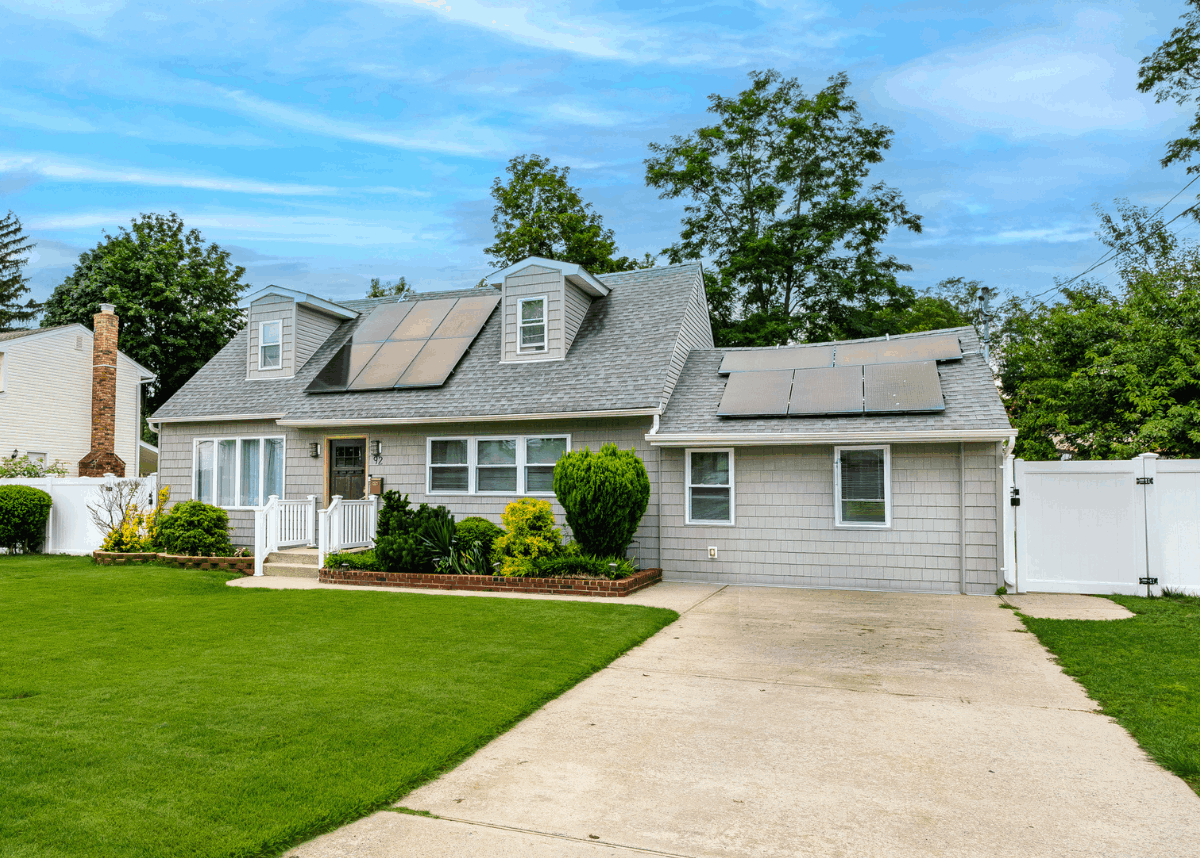
You're looking at a Long Island home online and notice something on the roof.
Solar panels.
For some buyers, that's immediately viewed as a positive. Lower electric bills sound great. For others, the panels raise a completely different set of questions.
Are they owned? Leased? Is there still a loan? Who maintains them? Does the buyer have to assume an agreement? What happens when the roof eventually needs replacement?
Those are all reasonable questions.
And they're exactly why I don't think buyers should evaluate solar with a simple “good” or “bad” label.
A solar system is another component of the property. Before deciding how much value it adds—or whether it creates additional obligations—you need to understand exactly what you're buying.
The First Question Isn't How Many Panels There Are
The first question is:
Who owns the solar system?
That one answer can change almost everything about how the solar system should be evaluated during a real estate transaction.
Residential solar generally falls into a few broad categories.
The homeowner may own the system outright. They may technically own it but still have a loan associated with the purchase. The equipment may be leased from a solar company. Or the homeowner may have a power purchase agreement—often called a PPA—under which another company owns the system and the homeowner purchases the electricity it produces according to the agreement.
Those arrangements are not interchangeable.
Before evaluating the benefits of solar, establish the ownership structure. “The house has solar” doesn't tell a buyer enough.
Owned Solar Is Usually the Simplest Situation
If the seller owns the solar system outright and there is no remaining financing attached to it, the transaction is generally easier to understand.
The panels are part of the property's overall equipment package, much like other improvements that remain with the house.
But “owned” doesn't mean buyers should stop asking questions.
You'll still want to understand the system's age, installation history, production, warranties, maintenance requirements, and whether documentation is available.
Solar panels can remain useful for many years, but the age of the system matters when evaluating future performance and remaining warranty coverage.
And there's another piece of the house sitting directly underneath those panels that deserves just as much attention.
The roof.
Don't Evaluate the Solar Panels Without Evaluating the Roof
Imagine buying a house with a relatively new solar system installed over a roof that's approaching the end of its useful life.
Eventually, that roof may need replacement.
Now the project isn't necessarily limited to removing old shingles and installing new ones. The panels may need to be removed and later reinstalled, which can add another layer of coordination and expense.
That doesn't make the house a bad purchase.
It just means the roof and the solar system should be considered together.
When I'm working with a buyer, I want to know approximately how old the roof is, when the solar system was installed, whether roof work was completed before installation, and what the process would be if the panels eventually needed to come off.
Those questions are particularly important on Long Island because many buyers are purchasing homes that have been standing for decades, even though the solar equipment itself may be much newer.
Financed Solar Needs a Closer Look
A seller may tell you the solar system is “owned,” but that doesn't necessarily mean it has been fully paid off.
Sometimes the homeowner purchased the system using financing and still has an outstanding balance.
That's where buyers and sellers need to slow down and understand exactly what the documents say.
Is the remaining balance supposed to be paid at closing? Can the financing be transferred? Is there any lien or other filing associated with the solar financing that needs to be addressed before title can transfer?
These aren't questions anyone should answer based on memory.
Review the actual agreement and involve the attorneys, lender, title professionals, solar provider, or other appropriate parties when necessary.
The fact that panels are physically attached to the house doesn't automatically tell you how the financial obligation associated with them will be handled.
Leased Solar Creates a Different Transaction
With a solar lease, the homeowner typically doesn't own the equipment.
A third-party solar company does.
The homeowner is operating under a contract that may continue for many years, and if the home is sold before that agreement ends, something has to happen to that contract.
Depending on the agreement, the buyer may be able to assume the lease. The solar company may need to approve the transfer. There may be specific procedures the seller must follow. Some agreements may offer a purchase or payoff option.
This is why I don't like discovering a solar agreement two days before closing.
If you're selling a home with leased solar, locate that contract early.
And if you're buying one, ask for it early.
There should be enough time for everyone involved to understand the transfer requirements rather than trying to solve them at the last minute.
What About a Power Purchase Agreement?
A power purchase agreement is another form of third-party solar arrangement.
Instead of purchasing the panels, the homeowner generally agrees to purchase electricity generated by the system under terms established by the contract.
That means the buyer shouldn't evaluate only what the seller says their current electric bill looks like.
Read the agreement.
How is the electricity priced? Does the rate change over time? How much time remains on the contract? What are the transfer procedures? What happens when the agreement reaches the end of its term?
Again, a PPA isn't automatically a negative.
But taking ownership of the house without understanding the solar contract is very different from making an informed decision after reviewing it.
“Low Electric Bill” Needs Context
This is one of the most common selling points you'll hear when a property has solar.
And it may be completely accurate.
But I still want context.
How much electricity does the system actually produce? How much electricity does the household consume? What has the owner's total energy cost been over the course of a full year? Are there separate lease, loan, or PPA payments in addition to the utility bill?
A homeowner who lives alone and carefully manages electricity may have a very different usage profile from a family of five with central air conditioning, an electric vehicle, a pool, multiple refrigerators, or other high-demand equipment.
So a seller's past bill can be useful information, but it isn't a guarantee of what your future bill will be.
Your consumption matters too.
Look at the Complete Energy Cost
When comparing a solar home with another property, don't focus on one unusually low electric bill. Look at several months of utility history when available, solar production information, and any separate payment connected with the solar system.
What Is Net Metering?
Solar homes usually remain connected to the electric grid.
During periods when the panels generate electricity, the house can use that production. When production exceeds current household consumption, qualifying systems may send electricity back to the grid and receive credits according to the applicable utility program and rate structure.
At other times—such as at night or when household demand exceeds solar production—the home can draw electricity from the grid.
That means having solar doesn't necessarily mean eliminating the electric utility from your life.
It changes the relationship between household consumption, onsite generation, and the grid.
Buyers should review the property's recent electric bills and system information rather than assuming every solar installation produces the same financial result.
Do Solar Panels Increase a Home's Value?
This is where I would be careful about making blanket statements.
Solar may add appeal for some buyers, particularly when the system is owned, relatively current, producing well, and reducing electricity costs.
But that doesn't mean you can take the original installation cost and simply add that amount to the home's asking price.
Real estate value is ultimately influenced by what buyers in that market are willing to pay.
A fully owned system may be viewed differently from a property carrying a long-term lease or PPA. System age matters. Production matters. Roof condition matters. The remaining contractual obligations matter.
And just like a remodeled kitchen, inground pool, finished basement, or other improvement, the market—not the owner's original receipt—determines how much additional value buyers assign to it.
What About Property Taxes?
New York provides potential property-tax treatment for qualifying solar energy systems, but buyers shouldn't make assumptions about exactly how an exemption applies to a particular property.
The existence of a solar system doesn't mean the home's entire property-tax bill is exempt.
The relevant rules generally deal with the increase in assessed value attributable to a qualifying solar installation, and local circumstances can matter.
If property-tax treatment is important to your purchase decision, verify the current assessment and applicable exemptions directly with the appropriate assessing authority rather than relying on what the seller remembers from when the panels were installed.
What Buyers Should Ask Before Purchasing a Solar Home
You don't need to become a solar engineer to buy a house with panels.
But you should know enough to understand what you're taking ownership of.
- Is the system owned outright, financed, leased, or subject to a PPA?
- If financed, is there an outstanding balance?
- If leased or under a PPA, how does the agreement transfer to the buyer?
- How many years remain on any contract?
- When was the system installed?
- Who installed it?
- Are warranties available and transferable?
- What maintenance has been required?
- Are recent production reports available?
- Can the seller provide recent electric bills?
- How old is the roof beneath the panels?
- What happens if the roof needs replacement?
- Are permits or installation documentation available?
- Are there any liens, financing filings, or other obligations associated with the system?
You may not receive every answer immediately.
That's okay.
The important thing is identifying what still needs to be verified while there's enough time in the transaction to verify it.
Sellers: Don't Wait for the Buyer to Discover the Solar Paperwork
If you're preparing to sell a Long Island home with solar, one of the smartest things you can do is organize the documentation before the house hits the market.
Find the original agreement.
Find the installation information, warranties, financing documents, recent electric bills, production reports, and contact information for the solar company.
If there's a lease, loan, or PPA, determine the transfer or payoff procedure before you accept an offer.
Buyers are becoming increasingly careful about the homes they purchase. I've discussed that shift before in Why Long Island Buyers Are Becoming More Selective in 2026.
Uncertainty creates hesitation.
If a buyer asks whether the solar system is owned and the answer is, “I think so,” you're creating a question that didn't need to exist.
Clear documentation makes the property easier to evaluate and can prevent avoidable delays later in the transaction.
Should Solar Panels Stop You From Buying the House?
Not by themselves.
I've seen buyers become nervous the moment they hear the words “solar lease,” just as other buyers immediately assume owned panels must make a house dramatically more valuable.
Neither reaction is particularly useful until you know the details.
The right way to evaluate the property is to understand the agreement, the equipment, the roof, the historical energy costs, and any ongoing financial obligation—and then look at the home as a whole.
Maybe the solar arrangement is attractive.
Maybe it's acceptable but not especially valuable to you.
Or perhaps the contractual terms don't fit what you're comfortable assuming.
That's the decision that matters.
Not whether the roof happens to have panels on it.
The Bottom Line
Solar can be a valuable feature of a Long Island home.
But buyers need to know exactly what comes with it.
An owned system with no remaining financing is very different from a leased system. A solar loan is different from a power purchase agreement. And a newer system installed over a newer roof creates a different ownership picture from panels sitting over a roof that may soon need replacement.
That's why the question isn't simply:
“Does this house have solar?”
The better question is:
“What exactly am I buying along with the house?”
Once you have that answer, you can make a much more informed decision about whether the solar system is a benefit, an obligation, or simply another feature to consider as part of the overall property.
Buying or Selling a Long Island Home With Solar?
Solar shouldn't be an unanswered question in your transaction.
Whether you're buying or selling, I'll help make sure the right questions are being asked early so you can understand the system, the documentation, and how it fits into the overall real estate transaction.
Let's Get You Moved.
This article is intended for general educational purposes. Solar agreements, financing terms, utility programs, tax treatment, warranties, transfer requirements, and property-specific circumstances vary and may change. Buyers and sellers should review applicable documents and consult their attorney, lender, title professional, solar provider, utility company, tax professional, municipal authority, or other appropriate professional when necessary.
Categories
- All Blogs (164)
- Baby Boomers (5)
- Beaches (8)
- Buyer Education (33)
- Central Suffolk Living (2)
- Communities (18)
- Demographics (1)
- Distressed Properties (1)
- Down Payments (4)
- Featured (5)
- First Time Home Buyers (20)
- For Buyers (42)
- For Sellers (34)
- Foreclosures (1)
- Generation X (4)
- Golf (1)
- Holidays (3)
- Holidays on Long Island (1)
- Home Buying Tips (12)
- Home Financing (1)
- Home Improvement (1)
- Home Preparation (2)
- Home Selling Tips (9)
- Homeownership (2)
- Housing Market Updates (17)
- Housing Trends (1)
- Infographic (4)
- Interest Rates (5)
- Lifestyle (41)
- Local Attractions (24)
- Long Island Housing Market (5)
- Long Island Living (40)
- Long Island Real Estate (40)
- Market Insights (29)
- Move-Up Buyers (19)
- Neighborhood Guide (2)
- New Construction (2)
- North Shore Living (1)
- Outdoor & Recreation (4)
- Pricing (13)
- Real Estate Process (2)
- Relocation Guide (35)
- Rent vs. Buy (6)
- Seller Education (24)
- Selling Myths (9)
- Senior Market (3)
- South Shore Living (5)
- Suffolk County Real Estate (3)
- Things to Do (21)
- Western Suffolk Living (5)
- Western Suffolk Neighborhoods (2)
Recent Posts





R.E. Associate Broker License ID: 10301221652
+1(631) 257-1522 | kenville@listingsoflongisland.com